Taken from Alan Kolata's Valley of the Spirits: a Journey into the Lost Realm of the Aymara (1996), pages 65-72


The story of this genesis as told by the Incas, the last native lords of the Andes, is redolent with miracles. As the story goes, Viracocha, the great creator god, rose from the deep, cold waters of the mystical inland sea stranded high in the Andes. He strode with purpose from Lake Titicaca to the sacred precincts of Tiahuanaco, where he undertook the primordial act of human creation.

Leaving the island on Lake Titicaca, Viracocha passed by the lake to the mainland taking with him two servants . . . He went to a place now called Tiahuanaco in the province of Collasuyu, and in this place he sculptured and designed on a great piece of stone all the nations that he intended to create. This done, he ordered his two servants to charge their memories with the names of all the tribes that he had depicted, and of the valleys and provinces where they were to come forth, which were those of the whole land.

He ordered that each one should go by a different road, naming the tribes, and compelling them all to go forth and people the country. His servants, obeying the command of Viracocha, set out on their journey and work. One went by the mountain range which they call the heights over the plains on the South Sea. The other went by the highlands which overlook the mountain ranges that we call the Andes, situated to the east of the said sea. By these roads they went, saying with a loud voice, "Oh you tribes and nations, hear and obey the order of Tici Viracocha Pachayachachic, which commands you to go forth and multiply and settle the land." Viracocha himself did the same along the road between those taken by his two servants, naming all the tribes and places by which he passed. At the sound of his voice every place obeyed, and people came forth, some from lakes, others from springs, valleys, caves, trees, rocks and hills, spreading over the land and multiplying to form the nations which are today Peru.

For the Inca, recounting their myth of genesis, Tiahuanaco was the pacarina: the holy place of human emergence.

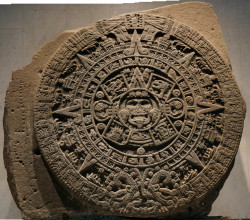
The Creator of the Andean world was an imagemaker; he skillfully sculptured the many nations of humankind in stone at Tiahuanaco, and then called them to life from the heart of the earth. Even today in that ancient place of origins, tourists wander through the shattered, graven images of creation scattered across the ground. Unaware of what lies beneath their feet, they tread upon the Creator's cosmic handiwork. Viracocha himself still stares implacably over the land and the people he created at the dawn of time. His imperious face is enshrined on the "Gateway of the Sun," the native Andean world's most perfect image of divinity. Viracocha gazes eternally to the east, to the rising sun, from Tiahuanaco's Temple of the Kings, the monumental structure known in Aymara as Kalasasaya, the Place of Standing Stones. His vision seems fixed on the distant horizon emphatically marked by the saw-toothed, shimmering white peaks of Mount Illimani. Arrayed in splendor, the Creator still presides over the abandoned halls of Tiahuanaco's kings. He wears a resplendent crown, fashioned from the very rays of the sun. He poses regally on a sacred, triple-terraced pyramid, holding a lightning bolt in his right hand, and an atlatl, the Native American spear thrower, in his left hand. Within the pyramid, we see the characteristic U shape of a cave, opening upward. We realize then that Viracocha's dramatic stage is not a simple, man-made temple, but rather a supernatural pyramid. The Creator stands on the sacred mountain pyramid from which the waters of all life flow.

In exquisite irony, the original text of Andean Genesis lies unrecognized, obscured under the lichen-encrusted faces of the granite statues that haunt the ruins of Tiahuanaco. What we have left to speak to us about the original beliefs of the ancient Andean peoples are written texts created by the Spanish; texts which purport to faithfully record the beliefs of the ancients, but remain little more than distorted simulacra. These Spanish versions of native Andean oral literature caricature native beliefs and twist them with more than a little Christian morality and cosmological outlook.

Tici Viracocha Pachayachachic was more than an aesthete, a carver and shaper of humanity. He was a god of action, a creator and destroyer of many worlds: the Shiva of the Andes. Before successfully creating the world of humans, Viracocha annihilated two prehuman worlds; first by fire and then again by flood. But the Creator, at last, established permanent cosmological order in Tiahuanaco. He carved the images of nations. Then, with the help of two faithful subjects, he called forth humanity from the natural world. Viracocha commanded the various tribes of man to emerge from the sacred landscape of "springs, valleys, caves, trees, rocks and hills," finally bestowing on each its natural name. Even at the dawn of time, Andean identity was inextricably bound to sacred places and to sacred names. Like Chrisostomos Choque and the yatiris of the contemporary Aymara world who call the achachilas by name, Viracocha subdues the wild, natural world with his voice, with the generative power of naming. Viracocha, the first shaman of the Andean world, expertly manipulates the tools of the seers' trade. He creates the universe with his voice and with his memory.

In true Andean fashion, humanity emerged not from a utopian Garden of Eden, but from the hard, living rock and water of the natural world. In this great tale of Andean Genesis, Viracocha shapes and reshapes humanity in the forge of trial and tribulation. In the latter half of the sixteenth century, Antonio de la Calancha preserved another version of the genesis story. This myth again recounts the sequential destruction of two prehuman worlds, first by fire and then again by flood, by the creator, here called only Pachayachachic, the "Invisible Lord." Pachayachachic unleashed his fury upon the inhabitants of these worlds when they directly began to worship the forces of naturewater and springs, mountains and rocks rather than the Creator himself. Only a few who had not given themselves over to the ecstatic worship of natural forces escaped Pachayachachic's wrath by retreating to protected redoubts on the highest mountain peaks. After the waters receded, these survivors were charged with repopulating the land. In time, these too lapsed into animistic worship and the Creator responded by turning them into stone. Finally, according to Calancha's version of the myth, "it is said that until now Pachayachachic had not created the sun, nor the moon, nor the stars but that he made them now in Tiahuanaco and in the Lake of Titicaca."

After abortive attempts subverted by the infidelity of his subjects, the Creator at last establishes permanent cosmological order in Tiahuanaco. From chaos and rebellion, the natural and social orders are reintegrated. The sun, moon, and: constellations are created at the place of origins and the era of mankind begins. The passage of these celestial bodies through the heavens creates Time itself. Their regular movement through the night sky becomes the astronomical guide by which humans mark the annual cycle of the seasons. Stars and man become synchronized. By observing the stars, the planets, the sun, and the moon, humans now possess the knowledge to interpret and intercept the flow of natural forces for their own benefit.

Still other versions of Andean Genesis at Tiahuanaco were recorded by Juan de Betanzos (1551), and Cristobal de Molina (1553). In the priceless, early version of Andean Genesis preserved by Betanzos, the world creator, here named Contiti Viracocha, emerges from Lake Titicaca and creates "the sun and the day, and the moon and the stars" at Tiahuanaco. Viracocha orders "the sun to move in its path"and so the time of mankind begins. After calling out people from caves, rivers, and springs scattered through the mythical landscape of creation time, Contiti Viracocha furiously turns some into stone for sacrilegious behavior. Then, beginning the act of creation again, the Creator fashions a new race of people to populate the earth. He created "a certain number of people and a Lord to govern over them and many pregnant women . . . and the children that they had in cradles, all of whom were made from stone." Contiti Viracocha dispatches these people of stone to the distant corners of the Andean world. "In this fashion," the Creator made "all the people of Peru and its provinces there in Tiahuanaco."

Viracocha keeps with him in Tiahuanaco only two faithful companions who become his sacred messengers and his divine memory. He charges his messengers to remember the names of all the people he created, as well as the precise location ("the springs and rivers and caves and mountains in the provinces") from which they will emerge after their creation in Tiahuanaco. Then he sends his divine messengers in opposite directions out into the newly created world to call forth the new race of humans: "One he sent to the part and province of Condesuyu, that is, to the left hand side standing in Tihuanacu with one's back to where the sun rises . . . the other he sent to the part and province of Andesuyo, that is, to the right hand side standing in the manner indicated, with the back to where the sun rises."

In Cristobal de Molina's version of the same myth, these two culture heroes are the Andean Adam and Eve: the primeval male-female pair and the children of Viracocha. Like the other variants on the theme of genesis, the events of the myth begin after a universal flood: ". . . all the created things perished through him [Viracocha] except for a man and a woman, who remained in a box, and when the waters receded, the wind carried them to sierra Guanaco [Tiahuanaco] . . ." Viracocha orders the pair to remain in Tiahuanaco, and gives them, as surrogates of the Creator, dominion over the people they are charged with calling forth from the sacred landscape. The female of the original couple, called the ymay mama Viracocha, is given domain over the mountainous lands, while the male, the tocapa viracocha, receives the mandate over the peoples of the plains and lowlands. Viracocha first creates the natural world, and then organizes it into complementary halves: the people of the mountains and the people of the plains.

The variations of the genesis myth recorded by Betanzos and Molina not only identify Tiahuanaco as the pacarina, the sacred place of origin for the physical universe, but also as the central point of partition of the social universe. The concept of duality, the world and all things in it divided into two parts, was deeply embedded in the worldview of ancient Andean peoples. Notions of duality still shape the mind of the native Andean peoples. In these myths, recorded during the death throes of the Inca empire, Tiahuanaco represents a kind of boundary marker, the point of cleavage between two archetypal social groups. To the ancients, Tiahuanaco was the revered center where complementary, but potentially competitive, social groups merged in a shared cultural identity. But who were these social groups? Where did they come from?

In his classic treatise on the natives of the New World, the Spanish cleric Bernabe Cobo informs us that before the Lake Titicaca region was conquered by the Inca during the mid-fifteenth century, the original name for Tiahuanaco was Taypi Kala. As Cobo explains it, Taypi Kala meant "the stone in the center"; the natives ascribed this name to the site because they considered the city to be in "the center of the world, and that from there the world was repopulated after the flood." According to our earliest dictionary of the Aymara language, compiled by the Italian Jesuit Ludovico Bertonio in 1612, taypi refers to something situated in the middle. But the term taypi does not merely denote a central location in space or time. Within the more subtle textures of meaning, taypi refers to a place, a zone, or a quality where two distinct things converge. For instance, Aymara Indians living today on the eastern side of the Bolivian Andes use the term taypi to refer specifically to the area on the mountain slopes where corn and potato farming converge. This is an important zone of agricultural production defined by the altitude at which both corn and potato farming is viable. This altitude, ranging from about 1800 to 3000 meters above sea level, incorporates the richest and most fertile regions of the Andean world. Here the concept of taypi emphasizes the quality of the melding of opposites (corn versus potato; grain versus tuber) to form a productive whole.

During the sixteenth century, we know that the Aymara Indians organized their social and physical landscape in a sacred geography redolent with symbolic associations. According to Aymara ways of thinking, their entire world was divided into two halves: Urcosuyu and Umasuyu. Urcosuyu referred to the mountain peaks and to the high, arid, rolling lands to the west of Lake Titicaca. Umasuyu, on the other hand, was the fertile valleys to the east of Lake Titicaca, from the lake edge into the Cordillera Real and beyond to the spectacular incised gorges and lush subtropical landscapes of the Amazonian watershed. In Aymara, urco conveys the sense of maleness and solidity. The people of the Urcosuyu were constantly in motion, nomadic pastoralists tending vast herds of llamas and alpacas. They moved freely across the roof of the Andean world in pursuit of fresh pasture and watering holes for their animals. In the mind of the Aymara, the inhabitants of the Urcosuyu were associated supernaturally with the celestial spherewith lightning, with thunder, with the spirit world of the sky. Dwellers in Urcosuyu were thought to possess the masculine qualities of virility, aggressiveness, and stoicism. They were a people as hard as the stones of their mountain world. The people of the Umasuyu, on the other hand, practiced a sedentary, agricultural lifestyle, and enjoyed fishing and hunting along the shores of Lake Titicaca. Uma itself means water in the Aymara language, and the inhabitants of Umasuyu were truly people of the lake. They were associated supernaturally with the underworld, with the watery domain of the spirits in the heart of the earth. Uma conveyed notions of passivity and domesticity and evoked the organic fertility of females. Between these two ecological and conceptual poles, between Urcosuyu and Umasuyu, between the People of the Mountains and the People of the Lake, was the taypi, the essential zone of convergence. The taypi that connected these two distinct social and physical halves of the Aymara world was Lake Titicaca itself. As Therese Bouysse-Cassagne, a French student of Aymara culture, perceptively remarked: