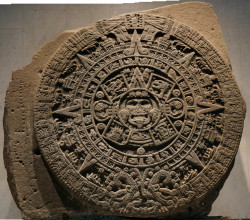
Consider the following reading in helping you make this reflection. (Used by permission of Brian Fagan, University of California, Santa Barbara.)


THE WORLD'S FIRST ARTISTIC TRADITIONS

The first Stone Age cave paintings were discovered in 1875, at Altamira in northern Spain. These depictions of bison were so fresh that most scientists flatly refused to believe they were painted during the Ice Age. It was only in the early years of this century that the discovery of further paintings in sealed caves in Southwestern France caused a general acceptance of the reality of Stone Age art. Since then, more spectacular discoveries and an enormous speculative literature have surrounded this remarkable art, some of the earliest in the world.

Origins

We say "some of the earliest in the world..." Until relatively recently, everyone thought that the French and northern Spanish cave paintings and art objects were the world's first artistic tradition. In fact, there are signs that people were painting and creating art objects in other parts of the world at least 18,000 years ago-in Australia and South Africa, to mention only two possible examples. Obviously, one fundamental question comes to mind: why did human beings suddenly start to paint on cave walls, decorate their bodies, and their artifacts? There is precious little intelligent speculation on this point, partly because everyone realizes we are simply too remote in time from the Magdalenians and other late Stone Age artists.

Motives for the Art

The theories about the reasons for Stone Age art revolve around three fundamental hypotheses:

· That the artists created art for art's sake. This supposes that they had the same attitudes to art as we do-thus, the artists may often have created an image to entertain themselves, for the enjoyment of their audience, but everything we know about living hunter-gatherer societies hints at much more profound motives.

· "Sympathetic hunting magic" theories. Such theories argue that, since most of the images are of animals, then the art was connected with the fertility of animals and success in the hunt. That the art is connected with the animal world seems beyond question, but the relationship between the animals and humans seems far more complex than merely one of hunting magic.

· What we can loosely call "symbolism theories." Modern investigators are examining rock art on a comparative basis, looking at the symbolism of modern hunter-gatherers and the art of such groups as the San of Southern Africa and the Australian Aborigines.

San Rock Art and Its Meaning

Some of the richest data comes from historical and ethnographic researches into the San peoples who inhabited much of southern Africa in late prehistoric times. When Europeans settled at the Cape of Good Hope in 1652, the San were still painting pictures not only of game and daily life, but of important ceremonies and trance rituals. In the three centuries that followed, they were decimated by disease and encroaching European settlement and the painters gradually died out-but not before painting rec coated soldiers hunting them in the mountain valleys below. To the colonists they were little more than animals. "He has no religion, no laws, no government, no recognized authority, no fixed abode," wrote one European missionary. In the 1830s, farmers hunted them on horseback on Sunday afternoons-for sport.

Today, only a few thousand San survive in the arid Kalahari Desert of what is now Botswana. None of the groups responsible for prehistoric rock art survived the nineteenth century. But they left an extraordinary chronicle behind them-thousands of painted and engraved rock surfaces in Zimbabwe and South Africa. The paintings are delicate, even minuscule. Human figures are often no more than a few inches high. Reds, blacks, yellows, whites, the colors vibrate softly from rock shelter walls. Archaeologists have long been intrigued with this magnificent art and the motives behind it.

One of the first people to study the art was German linguist Wilhelm Bleek, in the 1870s. Living in Capetown, he discovered by chance that some San were working as prisoners on the breakwaters for the new harbor. He persuaded the Governor to release them into his care, so he could learn their language and customs. Bleek compiled more than 12,000 pages of notes on San rituals, myths, and beliefs. The San told him of the medicine men of the game and the rain, who controlled antelope herds and the mythic beasts that brought rainfall. Bleek showed his informants some copies of rock paintings, in which they identified medicine men leading rain animals across their hunting territory.

Bleek also learned of trance performances that the medicine men would use to control game or capture the rain animal. While the women clapped and sang the medicine songs, the men would dance. This activated a supernatural potency that made them tremble, sweat, experience a rising sensation, bleed from the nose, and finally "die." In the trance, the medicine mens' spirits were thought to leave their bodies to fight off evil influences, control game, or capture the rain animal. Some of these men were painters.

The eland is the largest and fattest of all antelope, so bulky that an agile hunter can run it down. One kill can sustain a band of hunters for weeks. "All other animals are like servants to the eland," a San told archaeologist David Lewis-Williams, an expert on prehistoric art. This animal figures large in nineteenth century hunting ritual. Bleek's informants had recounted eland myths that associated the animal with honey, a substance with a strong, sweet smell similar to that which rises from a dead eland when it is skinned. Lewis-Williams soon discovered this scent is considered redolent with power among modern San. Kalahari San will dance around the carcass of a freshly killed eland. In this dance, the medicine man, who has special control of eland potency, enters a trance and cures everyone of ills by removing "arrows of sickness" that may be directed against them.

Lewis-Williams has examined thousands of prehistoric paintings with this ritual at the back of his mind. There are many depictions of eland with medicine men. In some instances dancers cavort around a dying eland, its hooves crossed like those that Lewis-Williams himself saw dying. White dots depict the sweat that pours from the dying animal falling from a dancer who is "dying" in the trance. He believes that many paintings show dancers acquiring the potency released by the death of the eland. The trance is so powerful the men become eland themselves. The whole being of the medicine men and the people becomes merged with the most potent of all animals.

Lewis-Williams believes San rock art made up complex metaphors that reflected symbolic values in the San world. Each superimposition, each frieze, whether of eland or other animals, was a network of relationships that had profound meaning to the artists and medicine men. Undoubtedly, the same was true of Cro-Magnon art, which means that we will never comprehend the precise symbolic meaning of the first art from a remote, long vanished world.


Also reflect on the following extracted from Richard Leakey's Origins Reconsidered 1993:

(Pages 328-335)

No description of Lascaux is complete without the story of the Shaft. Just off the Apse, halfway along the passageway toward the Chamber of Felines, is a twenty-foot-deep hole, wide enough for one person to be in comfortably, but little more. A metal ladder is the way down, and a flashlight beam illuminates the scene. Among the sparkling yellow and white calcite crystals on the wall, a great black bison is poised for attack, its forelegs taut as a spring, its tail lashing. The animal appears to be desperately wounded, with what looks like a barbed spear across its body. Its entrails spill to the ground. A man has fallen in front of the bison, not a figure crafted with the fidelity of the other images in Lascaux, but a stickman with no life, wearing what might be a bird mask. Nearby, what looks like a bird on the end of a staff, perhaps a spear thrower, and a rhinoceros. All painted in black, and about as enigmatic as anything in Lascaux.

The most obvious interpretation of the scene in the Shaft is that it is connected with hunting magic, perhaps the re-enactment of a hunting accident. But the most obvious explanation may not be the correct one, for three pairs of dots separate the rhinoceros from the rest of the scene. Simple in themselves, and perhaps without import, the dots are just one example of an element in Lascaux art, and in all cave art, that I have not yet mentioned. This is the profusion of nonrepresentational, geometric patterns. In addition to dots, there are grids and chevrons, curves and zigzags, and more. Many kinds of patterns are to be found, sometimes superimposed on animal images, sometimes separate from them. The coincidence of these geometric motifs with representational images is one of the most puzzling aspects of Upper Paleolithic art.

For the Abbe Breuil, these geometric patterns, or signs, as they are called, were part of hunting paraphernalia traps, snares, even weapons. Leroi-Gourhan included them in his structural duality. Dots and strokes were male signs, he said; ovals, triangles, and quadrangles were females signs. Just recently a South African archeologist, David Lewis-Williams, has suggested that neither interpretation is correct. They are, he says, images plucked from a mind in the state of hallucination, a sure sign of shamanistic art. His argument is based on a study of San art, in southern Africa, and a neuropsychological model that may be basic to much human image making in hunter-gatherer societies, including those of the Upper Paleolithic.

When Lewis-Williams began studying San art four decades ago, it was generally interpreted as representing simple, schematic images of everyday San life. Recently he realized that the images were not realistic in that sense but instead were shamanistic art, which has a different kind of reality, the reality of another world. The key insight here has to do with the trance-induced hallucination that shamans experience during their rituals.

Having made the link between the art, the shamans, and hallucination, Lewis-Williams resorted to the neuropsychological literature, seeking clues to that connection. "There were reports of visual hallucination, very precise descriptions," he says. "The research shows that in early stages you see geometric forms, such as grids, zigzags, dots, spirals, and curves." These images, six different kinds in all, are shimmering, incandescent, mercurial- and powerful. Called entoptic images-which means "within vision"-these phenomena are products of the basic neural architecture of the human brain. "Because they derive from the human nervous system, all people who enter certain altered states of consciousness, no matter what their cultural background, are liable to perceive them," says Lewis-Williams.

In a deeper state of hallucination, stage two, people try to make sense of these images. The results are dependent on an individual's culture and present concern. A series of curves may be depicted as hills if the subject is thinking about the country-side, for example, or waves on the sea if he has thoughts of sailing. San shamans frequently manipulate series of curves into images of honeycombs, since bees are a potent symbol of supernatural power that these people harness when entering a trance.

People who pass from stage two hallucination to stage three often experience a sensation of a vortex or rotating tunnel around them, and soon have hallucinations filled with iconic images, not just signs. "While Western subjects hallucinate airplanes, motorcars, dogs, and other animals familiar to them," says Lewis-Williams, describing laboratory experiments, "San shamans hallucinate antelope, felines, and circumstances, though bizarre and terrifying, derived ultimately from San life." In this final stage, subjects come to "inhabit rather than merely witness a truly bizarre hallucinatory world." It is here that "monsters" appear, part human, part beast, known as therianthropes.

Having established this three-stage neuropsychological model, Lewis-Williams, together with his colleague Thomas Dowson, turned again to San art to see how it might fit. "The first thing we found was that all six entoptic signs are in San art," recalls Lewis-Williams. "This encouraged us to believe that the model was valid, because we knew that shamanism was important in San life." Indeed, there was good ethnographic evidence that San art was shamanistic art. In addition, Lewis-Williams once met an old woman, probably the last survivor of the southern San, whose father had been a shaman. "She demonstrated how dancers seeking power turned to face the paintings on the wall of the rock shelter and how some placed their hands on the paintings of eland to gain power," he says.

The eland, a large antelope, is to the San what horse and bison seem to have been to the Upper Paleolithic people, at least in their art. The eland is the most frequently depicted animal in San paintings. It has potency, say the San, and it comes in many forms, many qualities. Perhaps the horse and the bison were sources of potency for the upper Paleolithic people, images that were appealed to and touched when spiritual energy was required.

The question, in effect, is whether Upper Paleolithic art bears the telltale signs of Lewis-Williams's three-stage neuropsychological model, and could thus be shamanistic art. "upper Paleolithic art includes many of the geometric signs that fall within the range of entoptic elements determined by laboratory research," he says. "Sometimes these motifs are placed on animals, but others, like the grids and fragmented grids at Lascaux, are depicted in isolation. In addition, Upper Paleolithic art includes a range of depictions equivalent to stage three hallucinations therianthropes, monsters, and realistic animals." The neuropsychological model fits Upper Paleolithic art as well as it does San rock art.

Of the range of images in Upper Paleolithic art, the most arresting are the therianthropes. There are not many of these human-animal figures, but they seize the imagination. The most famous example is the so-called sorcerer in the cave of Trois Freres, in the French Pyrenees. Deep underground, in a cramped cavern, the sorcerer dominates the space. Denis Vialou, who has studied the cave in detail, describes the image "The body is uncertain, but is some kind of large animal. The hind legs are human, until above the knees. The tail is a kind of canid, a wolf or a fox. The front legs are abnormal, with humanlike hands. The face is a bird's face, odd, with deer's antlers." In a manner unusual for Upper Paleolithic images, the sorcerer is staring directly out of the wall, a full-face stare that transfixes the spectator.

Below the sorcerer are several heavily engraved panels, a riot of animal figures with no apparent order, no pattern. In the midst of all this is another human-animal figure, again with human hind legs. Human hind legs on animals are common in upper Paleolithic art, incidentally, as are hoofs on otherwise human figures. This therianthrope is standing upright, with a bison's body and the head of a bison, with horns but a somewhat human face. The front legs are odd, in the same way as the sorcerers forelimbs are. This individual is holding what may be a bow or a musical instrument. "Directly in front of this image is an animal," explains Vialou. "It has reindeer hind legs and rear end, showing female sex prominently displayed, the only one known in upper Paleolithic art. The rest of the body is bison, the head turned, looking back over its shoulder at the first individual. Something special is going on between these two, I'm sure of that."

We see something similar in Lascaux. The very first beast in the stampede in the Hall of Bulls is an enigma. Known as the Unicorn-wrongly, because it has two very straight horns-this beast has a swollen body on thick limbs and a head of no known animal. There are six circular markings on the body and the partial outline of a horse. Look at the head again, squint-and the profile snaps into that of a bearded man.

These therianthropes in Upper Paleolithic paintings were once dismissed as the products of "a primitive mentality [that] failed to establish definitive boundaries between humans and animals." I do not think so. A more convincing argument is that they represent shamans or hunters dressed in animal skins, sometimes wearing horns or antlers. In the context of shamanistic art, however, they are explained as the outcome of stage three hallucination, something as real for the artist as a horse or a bison.

For the Kalahari San, the eland is the pathway to the potency of the spirit world, a multifaceted symbol of the people's cosmos. When a San shaman goes into a trance, he harnesses that power, becomes part of the world beyond, becomes invisible to the singers and dancers around him, and draws images on the rock face. Ask the San who drew the images, and they say the spirits. The shaman is merely an instrument of the spirits. And the rock face is more than a surface for the paint; it is the boundary of this world and the world beyond. Often in San paintings, a line "disappears" down a crack, to emerge elsewhere, having traversed the spirit world. The rock face therefore becomes part of the meaning of it all, and the rock shelter itself assumes a special status, a place of veneration.

There is no doubt in my mind that the caves and rock faces bearing prehistoric images, in Africa and Europe, were special too. Some of them may have been places where bands aggregated, because of a seasonal abundance of a certain food. In that case, the rituals played out there, fragments of which we see in the paintings, built the mythological importance. Some of them may have assumed the status of an aggregation site because a mythological event occurred there. We can be sure that the entire landscape became imbued with elements of mythology, explanations of a people's origin and their place in the world.

Unfortunately, we foreigners are unlikely ever to know the true meaning of the images in the caves and in the rock shelters. Somewhere in Lascaux, I'm convinced, is the entire story of how those Magdalenian people, seventeen thousand years ago, understood their origins. Somewhere-everywhere-in the cave are cryptic messages about how they saw themselves in their world.

The place is imbued with meaning, but we can't decipher what is being said. The potency is palpable, but we are culturally blind to its content. In seeking to understand our origins, we come away from a place like Lascaux with a deep conviction of connectedness, and a humility at the power of the human mind....